Showing posts with label art. Show all posts

Thursday, January 3, 2013

A Lack of Color

Over winter break, I had the opportunity to go out and shoot some of my favorite local spots. I ended up shooting quite a bit of Black and White, and thought that it'd be appropriate to open the New Year with some of my favorite shots from the end of 2012 and the beginning of 2013.

"Hidden Chinatown" A women working in Chinatown's Golden Gate Fortune Cookie Factory

Oakland's Cathedral of Christ the Light
The interior of the Cathedral of Christ the Light

The Bay Bridge at night

St. Peter's and St. Paul's in North Beach

"Down Paradise Alley" A natural double exposure

Fire Escapes

Sunday, December 9, 2012

Photo Favorites 2012

Well, 2012 is almost come to a close. It's been a fantastic and eventful year for me, with travel through Mexico, China, as well as several parts of the US. I'm eager to see what's in store for me in this coming year, and if you get the chance, check out my fundraising campaign to send me to Cambodia this summer! In no particular order, here are my personal favorite photos from 2012:
"Changing China" The Canton Tower at night in Guangzhou.

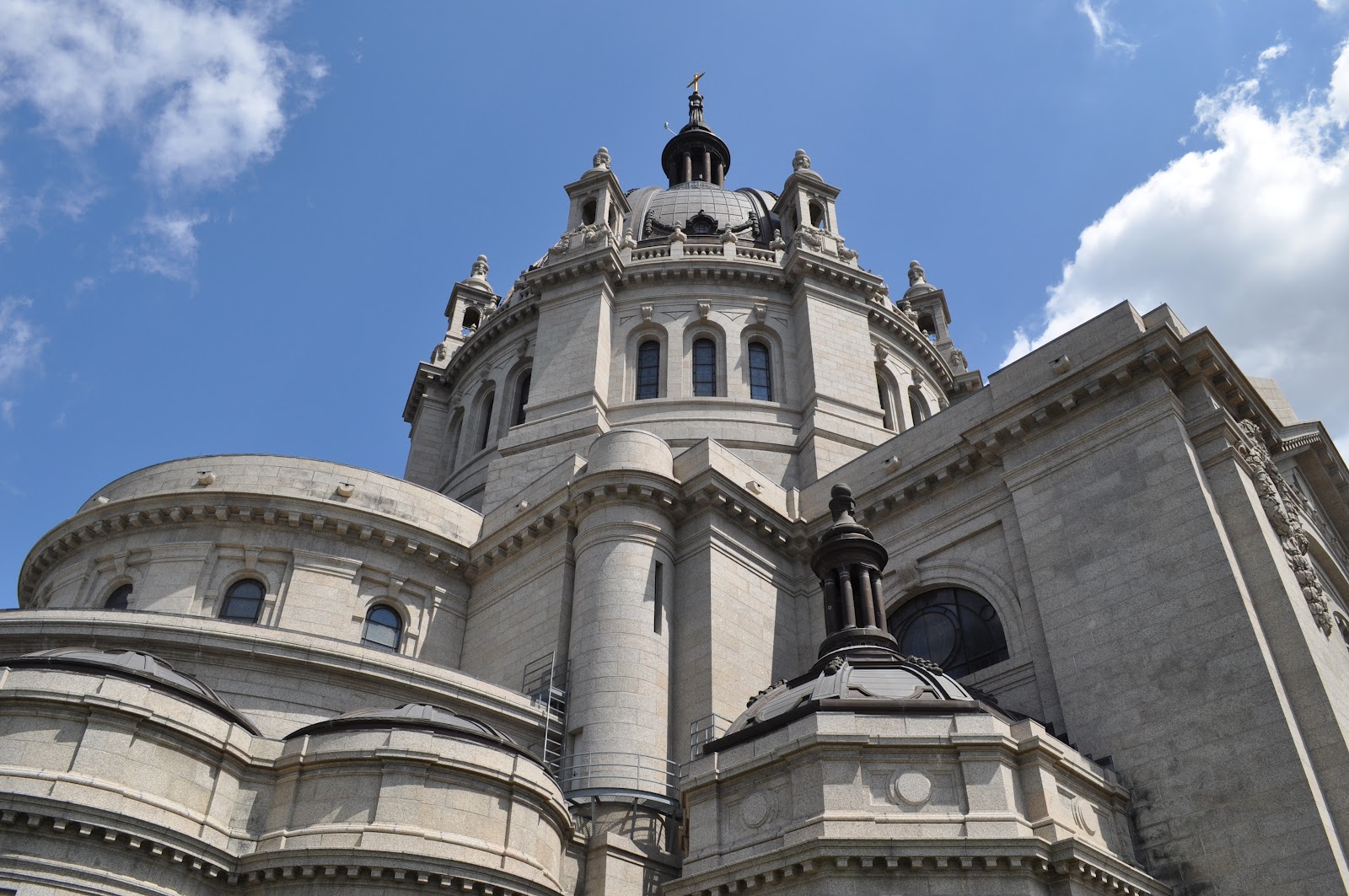
"Old St. Paul's" The Cathedral of St. Paul, MN


"When the hurlyburly's done, when the battle's lost and won."-Macbeth

"That Starlit Beacon" the Pigeon Point Lighthouse at night


"Fading Act" a man in Guangzhou demonstrates the disappearing art of Cantonese Finger Painting
"Temple Park" A man paints with water outside the Temple of Heaven in Beijing

"Peking's Secret" A maintenance bicycle parked in Beijing's Temple of Heaven

"Will You Help Them?" A girl at an orphanage in Northern Mexico
My "Wall Project" Check back a few posts to read all about it!

Friday, October 12, 2012

Neutral Density Filter

"My Ocean and Me"

     I love long exposure photographs. Something about how light can form trails and shapes, ocean waves can become placid ponds, and skies can gain a sense of hyper-realistic color and geometry makes me want to go out and shoot every night into the early hours of the morning. As a student, however,(especially one with a provisional motorcycle license, meaning I can't drive after dark) shooting at night is a rare treat. I still wanted to be able to get long exposures, preferably upwards of 5", but be able to do it without eating into my ever shrinking supply of sleep. After a quick buzz around Google, I came up with what seemed like a perfect solution: A Neutral Density Filter. I picked one up on Amazon, and took it out for a spin in Santa Cruz this week. I was more than impressed. Not only did the filter allow for me to preform longer exposures, but it also created a very dreamy feeling gray, with a heightened contrast, when at about half strength. I loved using this filter, and thought some of the results may be worth sharing. I hope you enjoy.

Gateway to the Sea 


Calafia's State
Land's End


Seastones
"When the hurlyburly's done, When the battle's lost and won." -Macbeth


Sunday, August 26, 2012

The Wall Project

      The Earth is smaller now than it has ever been in years past. With each travel innovation and technological upgrade, the globe shrinks. Friends and family may be traveling on continents far from home, while you explore distant lands. Miles disappear as planes and trains grow ever faster, and worldwide communication becomes increasingly more advanced.
      For a recent trip to China, I wanted to explore the principle of a journey being more a thought process during travel, rather than the physical movement of time and space.
     Knowing that I have a very well-traveled group of friends, I decided to try an experiment, which was eventually dubbed "The Wall Project." The idea behind The Wall Project was simple: Collect souvenirs, trinkets and currency from as many countries as possible and photograph them on China's most famous site — the Great Wall. The project would emphasize the fluidity of global culture, and bring mementoes of travels past — my own, and those of friends and loved ones, which toyed with the concept of a journey being more psychological than physical.
        With the help of Facebook, I was able to collect 17 trinkets, from every corner of the globe. The nations represented were Mexico, Haiti, the Cayman Islands, the Bahamas, Poland, Cambodia, Peru, the Philippines, Ireland, Kenya, India, Equatorial Guinea, Brazil, South Africa, Greece, Thailand and Hong Kong.
     Loading everything up into my backpack, we boarded a crowded bus leaving downtown Beijing, headed toward the section of the Great Wall known as Mutianyu.
The bus reminded me of my project: Seated behind us was an Australian man and his Japanese girlfriend; in the row of chairs across from theirs sat two elderly Jewish businessmen, who were in front of a Canadian-American couple, and a woman traveling with her parents from Singapore. A triad of French women took up the rear. Each traveler was there for a different reason, each with a different story.
     Somehow, from the 7 billion human beings spread across the six continents, 20 people from the far reaches of the planet had all ended up together on the same crazy bus headed toward the Great Wall of China. "My bus is something large in my mind. It is a cosmic bus holding sparks and back firing into the Milky Way and turning the corner of Betelgeuse without a hand signal." — John Steinbeck
     The pollution-induced haze was heavy as we caught our first glimpse of the Wall — a black silhouette against a sky, which had become a sheet of dull, throbbing light. The first step onto the Great Wall is ethereal — the feeling that your foot is touching something ancient, something solid enough to withstand a millenia of batterings from Mammon and Nature alike.
     After hiking along to the first watchtower, I decided to set up my trinkets for the first few shots. Grabbing a wrought-iron butterfly I picked up while in Haiti, I savored the irony of it. As I set up a carved-stone hippo on the battlement of the wall, I thought of the friend who had bought it in Kenya, and how it would have been a little over a year before that she was in an African market, purchasing that stone hippo. I tried to find the best way to make a South African armband appear in the photograph. Each trinket carried with it a unique story. Each trinket carried with it ghosts of past adventures. And each trinket carried with it the hope of a future journey.

Read more here: http://www.modbee.com/2012/07/17/2285766/the-wall-project-photos-at-the.html#storylink=misearch#storylink=cpy

Saturday, August 11, 2012

China Pt. 1: The Spirit of Peking


       The plane en route from San Francisco to Beijing was crowded. After 13 wrenching hours of flight, a fellow passenger stood up, looked in my direction, and shouted, “Welcome to China!” A flight attendant announced over the loudspeaker that visibility in Beijing was “Under one mile today,” with a hint of irony in her voice. People poured out of the airliner as it was being gutted to travel across the Pacific once more.
      Our van from the airport careened down a crazy, spinning Hutong alleyway. It was at this moment that I determined that China must be called the Land of the Dragon because of it's twisting roadways. Road Laws seem to be more Road Guidelines in China. The “right of way” is decided by whoever has the guts to pull into the intersection. Electric mopeds catapult across sidewalks, down streets, and through walkways in herds, like startled antelope with no where to run. Pedestrian traffic is left to take it's life into it's own hands. If you can run fast enough, you can cross the street.
      Wangfujing is Beijing's central shopping street. Grime covered buildings tower over streets caked with dusty pollution. A soft haze lends an ethereal element to the scene. While commercial centers, filled with designer Western clothiers dominate, traditional family businesses still carry on as they have for countless years. Wangfujing Cathedral stands as a black sheep; something which neither belonged in Ancient China nor it's confused identity crisis in which the nation currently rests. An unfinished shopping mall advertises Dairy Queen ice cream and Forever 21 Clothing. The notorious Beijing Night Market lies only a few blocks away.
      The Temple of Heaven, one of the landmark sights of China, shows a genius for acoustics. The little details make this site truly amazing- it's design is more simplistic than that of the Summer Palace or the Forbidden City; it's wonders are subtle. On top of the “Circular Mound Alter” (Really? Of all the names?) there is stone which lies in it's center. When standing atop this stone, you can hear your voice come from all directions. In the Hall of Echoes lie three pavement bricks, when standing on the first brick you hear your voice once, on the second brick twice, etc. The gold gilding remains as a shimmering reminder of China's wealth and power.
      Tienanmen Square. One of Communism's last outposts in the 21st Century world. Famous for it's 1989 Massacre and it's gargantuan portrait of the country's late leader, Chairman Mao Zedong, Tienanmen Square is a testimony to a national pride unheard of in the Western World. The deceased body of Mao is on display in a glass casket, and the Monument to the People's Heroes is still the dead center of Beijing. What many Westerners mistake for a tribute to the Red State is really a place as conflicted as the rest of the nation which it represents. The Tienanmen Square Protests of '89 were actually preformed by orthodox communists, who set themselves against the economic reforms of Deng Xiaoping and his successors. The Square is eerie in it's very presence. Red Guards and police vans still patrol the Square regularly, as if to make sure that everyone remembered where exactly they are. As an American who is not altogether the most patriotic person, Tienanmen Square served as a truly fantastic reminder that although our nation is far from perfect, we really do have something to be grateful for.
      Rising into the smog like a majestic bird, the Hall of Supreme Harmony is one of the most awe-inspiring sights that Man has ever created. The Forbidden City, with it's elaborate gardens, soaring rooms, and incredibly attention to detail cannot be described with the inadequate English language. “Beauty” simply does not cover half of the awe of the Imperial Palace.
A monk outside the Summer Palace
      The only thing I found truly striking in the Summer Palace was a large photograph, probably from the mid-sixties, printed onto a display board. The English caption simply read, “Pu-Yi and Mao Zedong.” The photograph featured two men shaking hands. If I hadn't read up on the history of China's last emperor, the picture wouldn't have appeared any different than any other photo of Mao. There are lots of those. Pu-Yi was China's last emperor. His story is one of the most understated tragedies of modern times, and I'd highly encourage you to read a more detailed account. Something about ending up as the gardener in the palace you grew up in puts a perspective on how much control we have truly have over our own lives.
      Snaking along the hills outside of Beijing's suburban areas is China's most iconic sight: The Great Wall. It truly is amazing, and I wish I could've spent more time climbing it. “He who has not mounted the Great Wall is not a true man.” -Mao Zedong
The Hutong. The one with the yellow front was our hostel.
      Beijing's magic lies in it's subtleties. Sure, there are the awe-inspiring sights of Ancient China and modern innovation, but the true spirit of Peking is embodied somewhere deep in an unpaved Hutong alleyway, where roast sticks of tofu can be found for 1 Yuan, and people are sitting outside, enjoying the evening over a cup of tea and a game of mahjong. One of my favorite experiences in China occurred in the Hutong Hostel we were staying in. To my knowledge we were the only guests staying in the courtyard home, which had been converted into a hotel/hostel. The staff was comprised of students who all lived together in the home and managed the guest rooms. One evening, my mother and I were invited to join them for a Dragon Boat Festival Party, as it was Dragon Boat weekend, one of China's larger holidays. We were told to return in an hour, so we went for a walk around the hutong where the hotel was located and the surrounding alleys. Upon returning, we found that the lobby had been decorated and that they had baked us special lotus-wrapped dumplings that are only served during Dragon Boat. They wanted us to play a game with them, and it turned out that the game they had in mind was something similar to charades. We played charades for nearly 2 hours. Our Chinese is terrible, and their English was comparable, but we still had the time of our lives. I have the feeling that those 2 hours that I spent in a hostel in a little alleyway somewhere in the urban sprawl of Beijing playing charades will stick with me for quite a while. 
My mother and I with the staff of our hotel

Wednesday, July 18, 2012

China's Change

                                                                     "Transitions"

     It looked like something out of a Cultural Revolution propaganda piece. Five farmers walked with rakes and shovels in hand along the rural road about 50 kilometers outside of Beijing. Each wore an olive-drab hat, adorned with a single red star. Wheat was spread out in patches along the road, drying beneath a sun hidden by layers of pollution.
      Deep within the urban sprawl of Beijing, The Monument to the People's Heroes lies in the center of Tienanmen Square, flanked by Red Guards. Across the square, Chairman Mao smiles benevolently down at his people from the northern gate of the Forbidden City. Merchants hawk their wears, which include copies of Mao's “Little Red Book” and t-shirts sporting an image of “Obamao,” which features the President's face pasted into the Chairman's famous military uniform.
      China is a land of contradictions. In some aspects it appears to be a frighteningly regimental society, plagued by an overzealous government, while any amount of time on the chaotic streets of Beijing would make you think otherwise. 1,000 year-old temples lie in the shadow of modern skyscrapers. Communist Party buildings stand within blocks of international bank chains. Wangfujing Avenue's many malls and highrise hotels show the world's largest country's push towards Western modernization, while aspects of the ancient hutong (narrow alleys of courtyard homes, restaurants, and shops) culture remain intact.
      In the Temple of Heaven park, an elderly man and woman stood, worshipping the Tree of the 9 Dragons, a 500 year old Chinese Juniper. Meanwhile, thousands lined up in Tienanmen Square, waiting for a chance to glance at Chairman Mao, whose body is on display in a glass casket. A few kilometers from the square, in an unfinished shopping mall, Western chain stores and restaurants attracted an untold number of China's youth. International tourists are still a novelty, as Americans are often asked to have their picture taken.
      There is a “Lost Generation” in China, although it is nothing as romantic as the Parisian expats of Hemingway. Many of the elderly Chinese still cling to the fading religious customs of their ancestors, whether Taoist, Buddhist, or some combination of the two. It is difficult even for the strongest government to expel nearly 2,000 years of tradition. Tienanmen Square, with it's devotion to the deceased Chairman and his Party, is filled with many people of all ages, however, those of middle age predominate. Growing up in a “Continual Revolution” shows it's products in China's middle aged citizens. There is, however, one age group that does not yet seem anchored. The young people of China live in a continually changing nation, in it's own adolescent stages. Western chain stores and banks have taken root in urban metropolises. McDonald's stores look out on ancient streets near the centuries old Forbidden City, which is bordered with Tienanmen Square. The contrast provides young Chinese with an apparently uncomfortable choice: forsake the rigid, militaristic comforts sought by their parents, as well as the ancient ways of thought and life belonging to their grandparents, for Western ideas and culture, or keep up with the traditions of either one. Both Maoism and ancient thought require China to withdraw within itself, while succumbing to American and European ideology will ultimately destroy both of China's unique thought systems.
       The young people of China face a serious choice, as their decision will change global politics and economics- for better or for worse.


                                                                    "Temple Park" -A man paints characters with water outside the Temple of Heaven in Beijing.

                                                       A very modern bridge in Guangzhou
 
                                                                   "Canton Lost"- Guangzhou's skyline.


Thursday, April 12, 2012

The Theft Of A Life

The Theft Of A Life- Modern Day Slavery
Over the several past months, I have been working on an Audio/Visual presentation for a competition that I annually compete in. In past years, I've done topics that are more "light hearted," yet this year I wanted to create something more meaningful. All of the photographs were taken with the thought in mind that art has been used over and over again to prick the conscience of a community. This video was made for the 27 Million slaves that live in bondage today. Please take the time to watch it, and check out these websites when you're finished:
www.notforsalecampaign.org
www.ijm.org
www.freetheslaves.net
www.stepsofjustice.org
www.polarisproject.org
www.antislavery.org

Friday, January 20, 2012

Art Gallery Show

 This is the piece of mine that sold during the show, it is entitled "Take Us To the Sea"
 Split Rock Lighthouse in northern Minnesota- "The Beacon"
 "Inspire"
 "The Sentry" A tree overlooking Yosemite Valley.
"Solitude"


This winter I had the opportunity to display at the Mistlin Art Gallery, a local venue. These are the photographs that I chose to exhibit.


Sunday, January 8, 2012

Harris Shutter, Pt. 2: Multiple Exposure


For these shots I used my home made Harris Shutter, and exposed one color, then move the object, and exposed another color. None of these photos are edited in any way. As my camera does not have the ability to do a "true" double exposure, I replaced the lens cap during the exposure.